Toronto Condo Flooring Bylaws & Soundproofing: IIC 72 Requirements, HOA Approval & Underlayment Guide
HB Flooring Team
Condo Flooring Specialists
Navigating Toronto High-Rise Flooring: The Rules You Must Know
Upgrading the flooring in a downtown Toronto condominium — whether you are in CityPlace, Liberty Village, Yorkville, or along the Queens Quay waterfront — is fundamentally different from renovating a detached home in the suburbs. In a single-family house, your flooring choices are entirely your own. In a condominium, your floor forms the physical ceiling of your downstairs neighbour.
With more than 2,800 registered condominium corporations across the Greater Toronto Area (GTA), each governed by its own Condominium Declaration and Board Rules under the Ontario Condominium Act, getting your flooring project approved requires strict adherence to soundproofing regulations, acoustic testing standards, and property management protocols.
At HB Flooring, our dedicated Condo Flooring Specialists have managed hundreds of successful high-rise installations across Toronto. In this comprehensive guide, we explain everything GTA condo owners need to know about acoustic IIC ratings, property management approvals, and compliant underlayment systems.
Acoustic Science: Understanding IIC vs. STC Ratings
When your condo board hands you their Architectural Guidelines, you will immediately encounter two acronyms: IIC and STC. Understanding the difference between them is vital to passing your board's review:
- Impact Insulation Class (IIC — ASTM E492 / ASTM E989): Measures the assembly's ability to resist impact noise transferred through the structure — such as footsteps, dropped objects, moving furniture, and dog claws. This is the single most critical rating for condo flooring approvals.
- Sound Transmission Class (STC — ASTM E90 / ASTM E413): Measures the assembly's ability to attenuate airborne noise, such as voices, televisions, music, and conversation.
- Apparent or Field IIC (AIIC / FIIC — ASTM E1007): The actual acoustic performance measured on-site in your specific building, which typically scores 3 to 7 points lower than pristine laboratory test results due to flanking paths (air ducts, perimeter walls, and plumbing conduits).
The Ontario Building Code vs. Condo Corporation Declarations
Many Toronto condo owners make the mistake of searching the Ontario Building Code (OBC) and assuming that meeting provincial minimums is sufficient. It is not.
The Ontario Building Code requires a minimum rating of only STC 50 and IIC 50 for party walls and floor assemblies between dwelling units. However, because modern high-rise living generates continuous neighbour-to-neighbour impact disputes, virtually all GTA condominium boards have amended their rules to enforce much higher acoustic performance.
| Acoustic Standard | IIC Rating | Condo Board Acceptance |
|---|---|---|
| Ontario Building Code Minimum | IIC 50 | Rejected by 95% of Toronto Boards |
| Older GTA Condos (Built 1980–2005) | IIC 60 – 65 | Conditional Approval with Underlayment Proof |
| Modern High-Rises & Luxury Condos | IIC 70 – 74+ | Standard Requirement (Guaranteed Approval) |
Acoustic Underlayment Solutions: What Actually Meets IIC 72+?
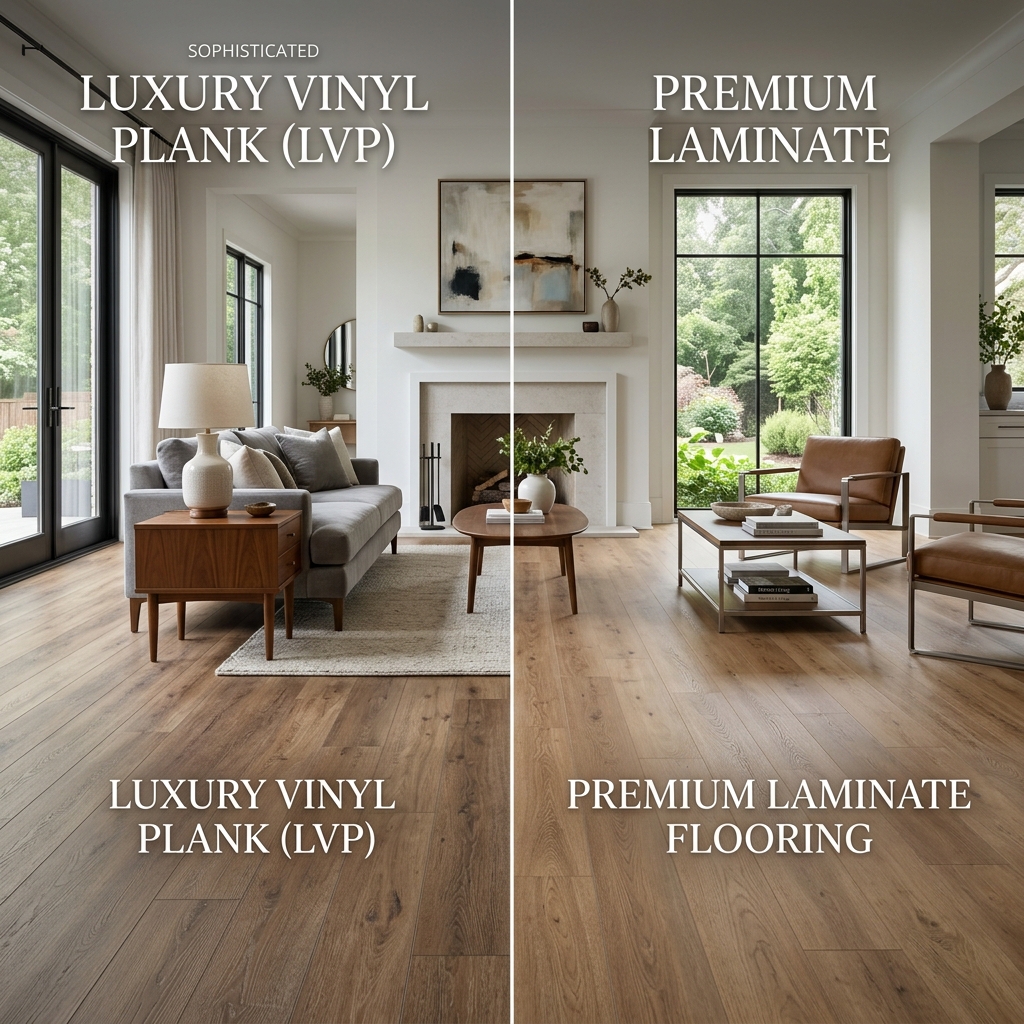
Because luxury vinyl plank (LVP) and premium laminate are rigid floating floors, the acoustic underlayment beneath them does 90% of the sound-dampening work. Here are the approved underlayment categories we install in GTA condos:
1. High-Density Natural Acoustic Cork (3mm to 6mm)
Natural cork remains the gold standard for condo boards. Made from millions of air-filled honeycomb cells per cubic centimeter, 6mm acoustic cork provides exceptional dampening against high-frequency step noise, never compresses over time, and naturally resists mold. In laboratory tests on an 8-inch concrete slab with suspended ceiling, premium cork delivers ratings of IIC 72 to IIC 75.
2. Cross-Linked Closed-Cell Polyolefin / Acoustic Rubber
Brands like Regupol and Dura-Son use recycled rubber or cross-linked foam that creates a high-performance acoustic decoupling layer. These membranes are particularly effective at deadening low-frequency thuds (such as running children or heavy steps) and frequently test at IIC 70 to 73.
3. Pre-Attached Underlayment Pads (IXPE)
Many premium SPC vinyl planks come with a factory-attached 1.5mm or 2mm IXPE (irradiated cross-linked polyethylene) acoustic foam backing. While convenient, be cautious: standalone 1.5mm attached pads alone typically test around IIC 58–64 on bare concrete slabs. If your condo requires IIC 72, you may need a product certified as a complete system or an approved secondary acoustic barrier (subject to manufacturer locking system warranties).
The 5-Step Condo Corporation Approval Checklist
Failing to follow your condominium's official alteration procedure can result in immediate stop-work orders, security revoking elevator access, and fines of thousands of dollars. Here is the exact protocol HB Flooring follows for our condo clients:
- Obtain the Architectural Alteration Agreement: Request the formal renovation package from your property management office before buying any materials. Review the exact IIC/STC threshold and approved working hours (typically Monday to Friday, 9:00 AM – 5:00 PM; no weekend work).
- Submit Independent Laboratory Test Certificates: The condo board or their reviewing engineer requires official laboratory reports from accredited facilities (e.g., NGC Testing Services or Intertek) proving your floor and underlayment combination achieves the required IIC rating on a specific concrete slab thickness.
- Furnish Contractor Insurance & WSIB: Your contractor must provide a current WSIB Certificate of Clearance and a minimum of $2,000,000 to $5,000,000 in Commercial General Liability (CGL) insurance, explicitly naming your Condominium Corporation as an Additional Insured.
- Reserve the Service Elevator & Submit Security Deposit: Elevator bookings must typically be made 7 to 14 days in advance. Condo property management usually requires a refundable damage deposit ($500 to $1,000) during loading and material delivery.
- Arrange Dedicated Off-Site Debris Disposal: Condo bylaws strictly forbid placing construction waste, old carpet, baseboards, or flooring off-cuts in the building’s residential disposal bins or trash chutes. All demolition debris must be bagged and hauled directly off-site.
Subfloor Flatness in Condominiums: The Hidden Pitfall
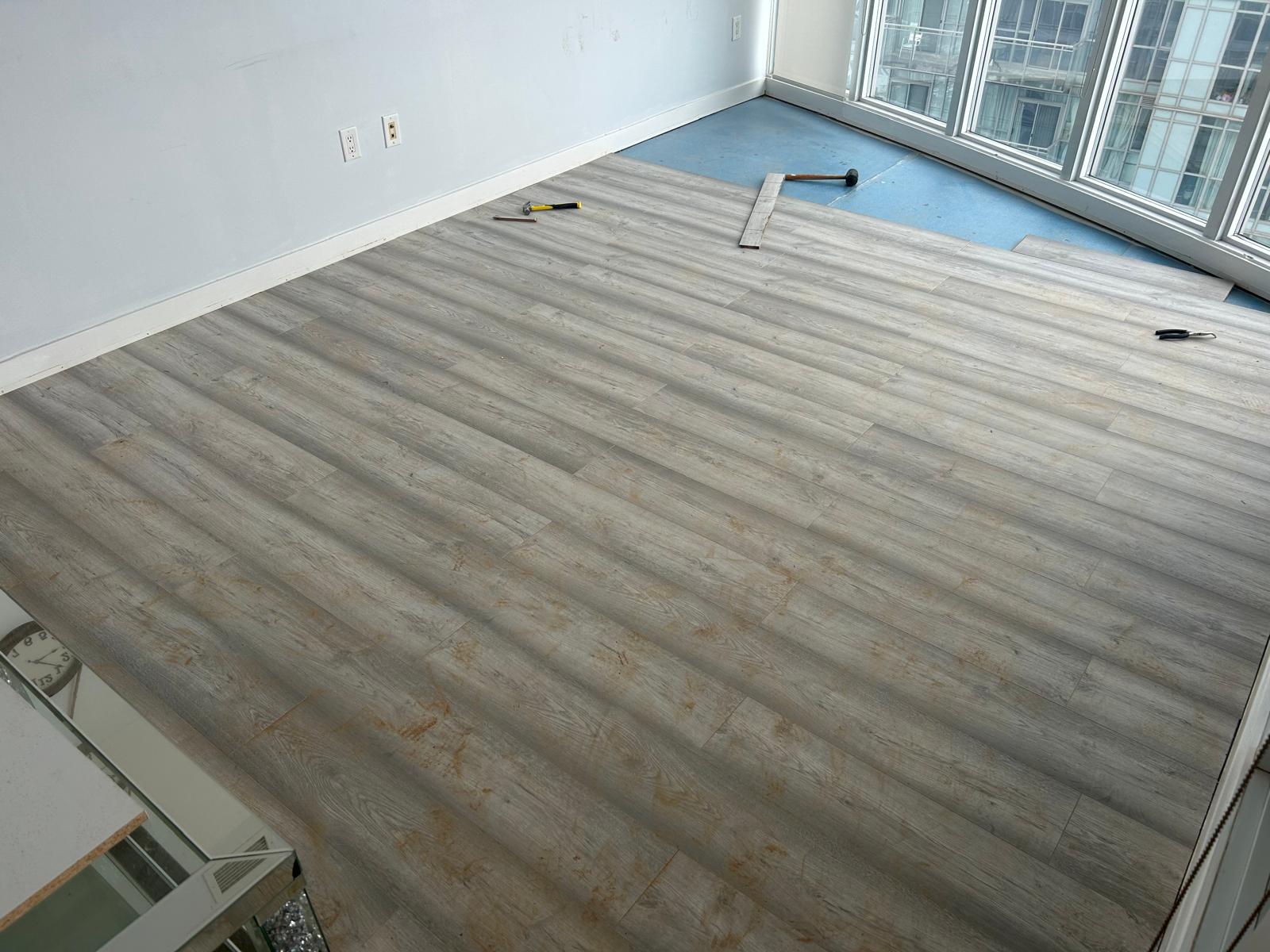
Condo subfloors are poured concrete slabs. While they appear flat to the naked eye, they frequently feature severe dips, humps, and expansion joint deviations created during high-rise formwork. If a floating floor is installed over a slab variance exceeding 3/16" over 10 feet, the click-lock joints will flex, squeak, and snap within 12 to 18 months.
Before installing any planks, we survey the concrete with precision laser levels and perform necessary subfloor leveling and diamond grinding to ensure your new floor floats over a dead-flat substrate.
Get Board-Compliant Condo Flooring with Zero Stress
At HB Flooring, we handle the entire condo approval package — providing compliant laboratory test certificates, WSIB clearances, and liability documentation directly to your property manager. Contact our team today or book your free in-suite measurement to get started.
Ready to Upgrade Your Floors?
Get a free, no-obligation quote. Our experts will come to your home, take precise measurements, and bring samples right to your door.
Share this article
About HB Flooring
Toronto's premier flooring installation experts. Specializing in luxury vinyl plank, laminate, and hardwood for over 15 years.
Contact our team →